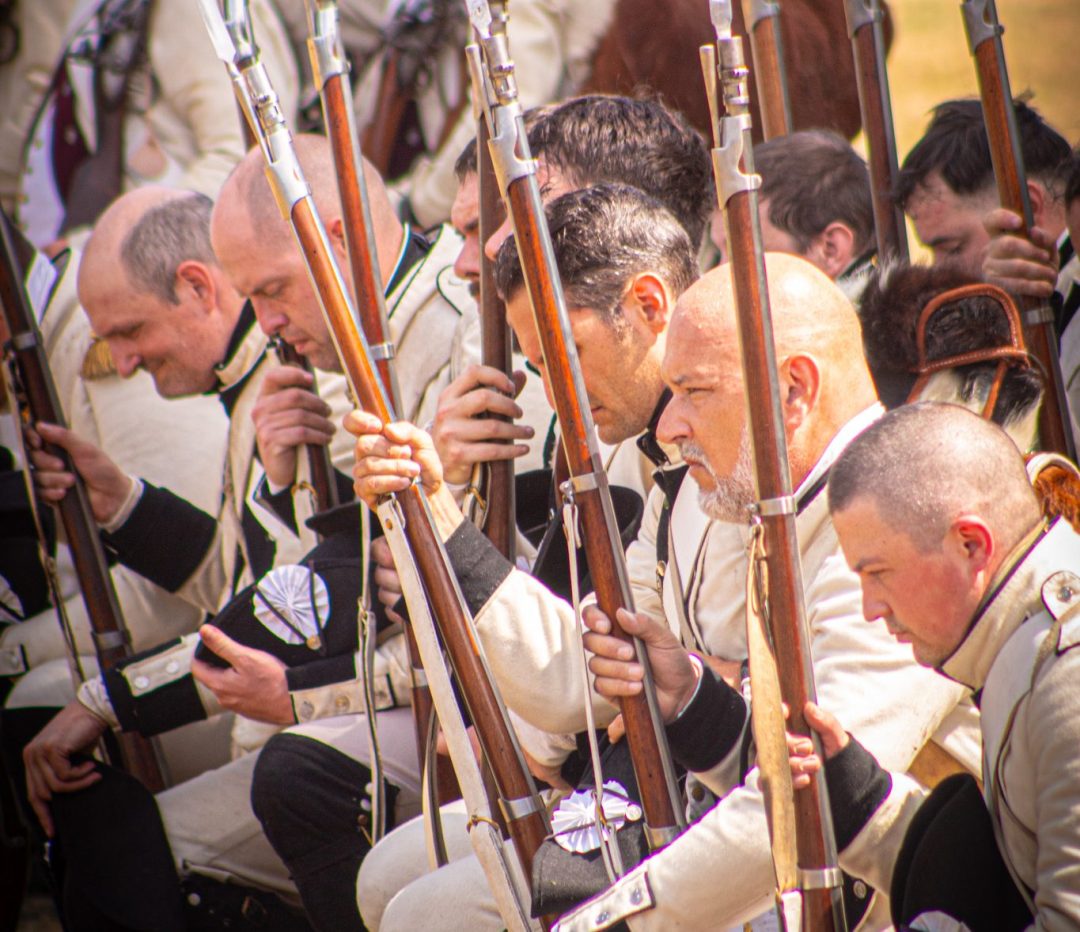
Religion was integral to eighteenth-century French society, and the same was true of the military!
Owing to the fact that a large part of the authority of the French monarchy’s absolute rule stemmed from its dedication to Catholicism, it is perhaps unsurprising that Protestants were not recognised in eighteenth-century France. Louis XIV’s 1685 Edict of Fontainebleau had revoked the religious tolerance of the sixteenth-century Edict of Nantes, and even Catholics who harboured different theological beliefs, such as Jansenists, were rejected. This segregation was not the case in the military though, which served as a melting pot for a myriad of different cultures and religious identities.
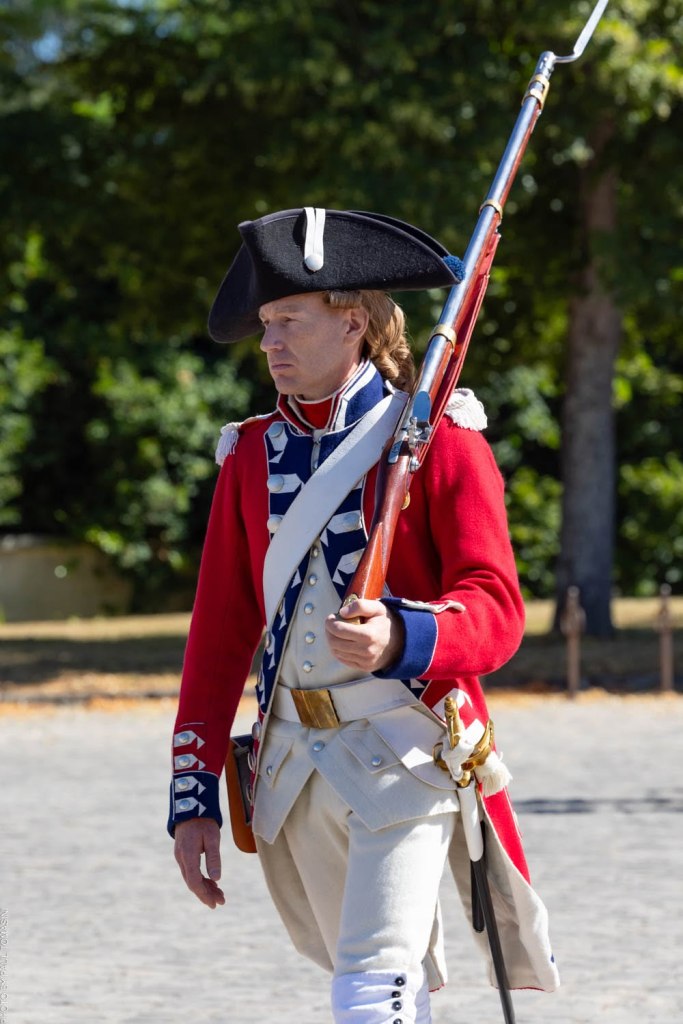
The French army in this period included a number of regiments raised from many non-French contexts: the Royal-Deux-Ponts were one of the German regiments, and at the end of the Seven Years War only consisted of 50.1% Catholics; some of the Colonels of the Swiss regiments, such as the Garde Suisse (shown here) actively hired Protestant chaplains. As a result, throughout the century, reforms were made that encouraged freedom of religious identity within the military. Louis XIV was the first to allow Swiss Protestants to be admitted to Les Invalides (the French inspiration for the Royal Chelsea Hospital, as support for retired servicemen); by 1770 a military academy existed for Protestant students; and in 1780 a corps of Greek Orthodox soldiers was even proposed by one writer.
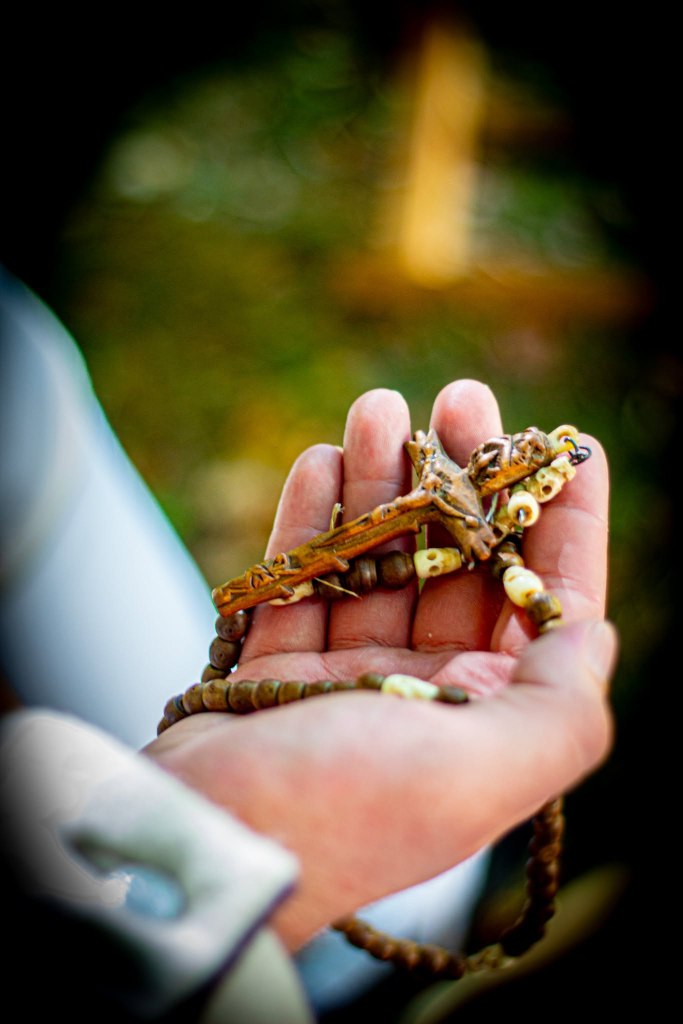
However, despite these reforms, Catholicism remained the dominant religion within the French army, and there are many accounts of officers converting to Catholicism (perhaps to receive the order of St. Louis, which was reserved for Catholics). In a way which is alien to many modern minds, Catholic practice permeated the French military of the 18th century. Indeed, one of the most common items found in the excavations of French forts in North America, such as Ticonderoga, is rosary beads. An original owned by one of our members is shown here. These rosaries were sometimes distributed to the soldiery by chaplains, whose presence in North America was probably more common than one would expect. Rochambeau’s Expédition Particulière, which arrived into Rhode Island in 1780, alone was accompanied by twelve Chaplains.
A more recent project led by Professor Renaud Morieux, of the University of Cambridge, has uncovered further insight into this aspect of life in the French military. His work has examined previously-undiscovered letters written by the families of French sailors during the Seven Years’ War, intended to be sent to their loved ones aboard a captured French ship. They never arrived at their destinations, but their personal messages demonstrate the importance of faith to those back home and in service: “I only think of you every day and that I pray to God to preserve your health”, wrote Mary Delamere to her husband. Together with provision in the drill manual for kneeling to pray, it paints a clear picture that religion was an integral part of French military life.
Photos by kind permission of Katie Marshall (header and rosary) and Paul Tomasini (Garde Suisse)
A special thanks goes to Christopher Tozzi, Joseph Gagné, and Jonathan Abel for their work and help on this topic. Suggestions for further reading include:
– Nigel Aston, Religion and Revolution in France, 1780-1804 (Macmillan, 2000)
– Renaud Morieux, “Communautés épistolaires, guerres et liens familiaux dans le monde maritime atlantique du xviiie siècle/Letter-writing communities, wars and family ties in the 18th-century Atlantic maritime world,” Annales: histoire, sciences sociales (2023), 78:2, pp. 333-373
– Christopher Tozzi, ‘Religion, Language and National Origins: Cultural Difference within the Old Regime French Army’, in Benjamin Deruelle and Arnaud Guinier (eds), La construction du militaire, Volume 2 (Éditions de la Sorbonne, 2022) pp. 19-36.


