In 1763, at the end of nearly a decade of bloody conflict, the French and Spanish governments signed the Treaty of Paris with Britain. France had already lost control of several key territories, including Canada, and the Spanish had lost Cuba, but the British were also facing bankruptcy. To end the war, Étienne-François de Stainville, Duc de Choiseul, proposed a redistribution of land across North America, ceding of some of the American mainland to the British, but returning several French and Spanish possessions in the Caribbean, which were more profitable and easier to protect.
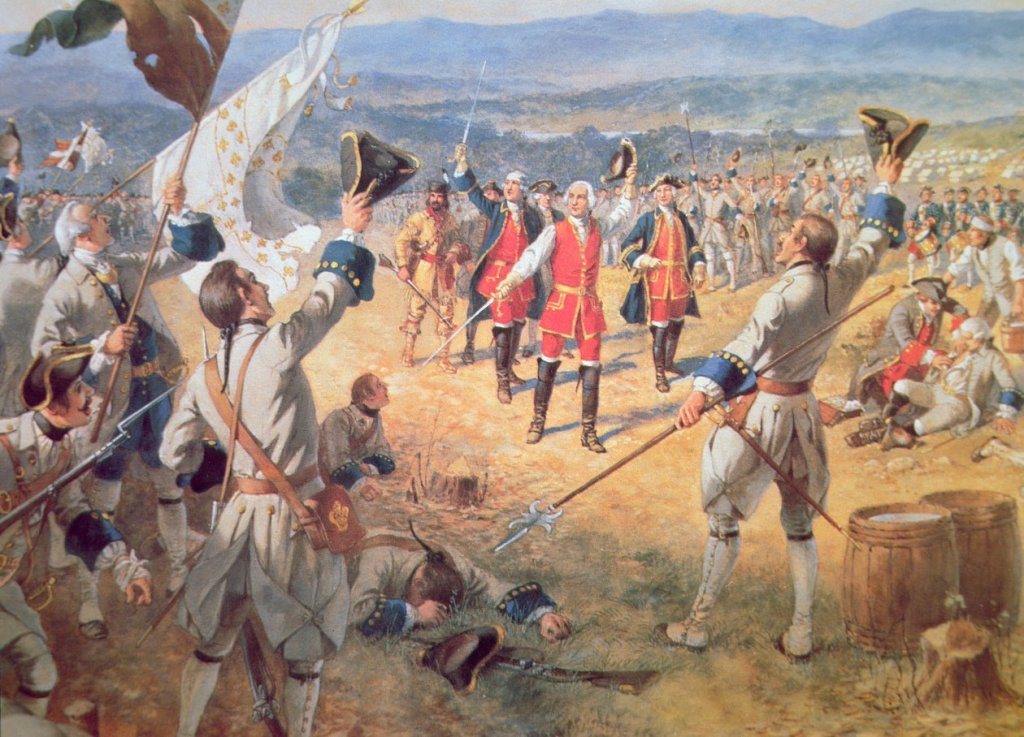
“The Victory of Montcalm’s Troops at Carillon” by Henry Alexander Ogden
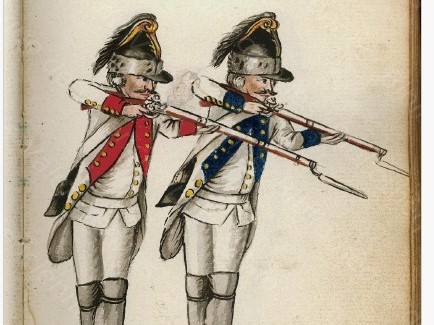
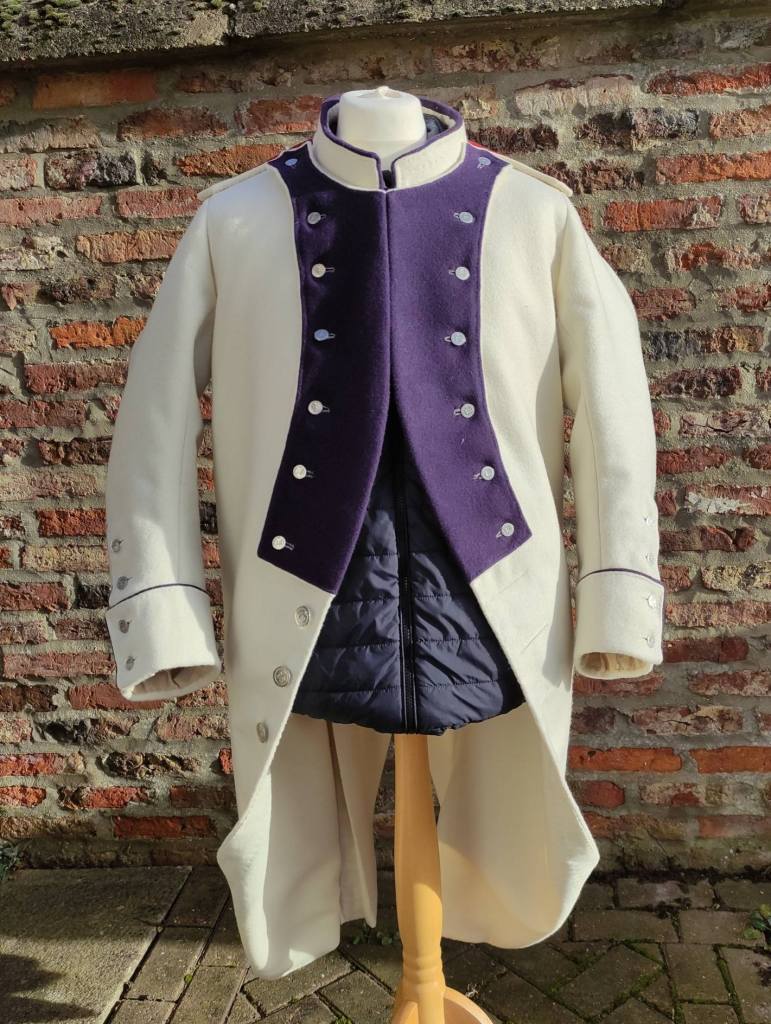
Choiseul, as a former soldier himself with experience during the 1740s, was keen to implement changes during the next decade he spent as Minister of War. These began in 1762, but continued well into the 1780s. The French way of waging war was evolving. Muskets were redesigned to be lighter and more efficient; sidearms were replaced to be more practical, and fewer were issued for cost; and the older style of heavy overcoats (called “justaucorps”) were replaced with a more streamlined, but still distinctly French, style of lighter clothes, which were to be layered for comfort.
Troupes de France, sur pied en l’année 1774. Livre 1er contenant La Maison du Roy, L’infanterie Francoise et Etranger; & Les Legionn des troupes Legere
Choiseul’s successor, Claude Louis, Comte de Saint-Germain, another former soldier, became Minister of War in 1775. He intended even greater reforms, targeting what he perceived as the luxury, favouritism, and social privilege which was weakening the French military. Punishment, drill, and crucially the officer corps all came under attack. Because this meant adopting elements of foreign militaries, the army resisted the changes that many believed were robbing the army of its French-ness. As a result, many of his ideas were rejected. Some stuck though: headwear and uniforms became “modern”, the army was becoming more operationally capable of deploying across continents, and the French state had increasingly more control over its soldats.
By the end of the American Revolution, the French way of waging war was nearly unrecognisable from how it was in 1763.
Formation
Part of Choiseul and Saint-Germain’s reforms included improving the French army’s ability to deploy across the world. The 11 “metropolitan” 4-battalion regiments were split up in a process called “dedoublement”, becoming 22 2-battalion regiments. Le Régiment d’Auvergne, raised primarily but not exclusively in the Auvergne region in the south of France, was one of those. The first and third battalions remained as part of d’Auvergne; in 1776 the second and fourth battalions formed le Régiment Gatinois.
Image right: used with kind permission of Maddy Richardson
Timeline
1776, 25th March
Le Régiment Gatinois created from two battalions of Le Régiment d’Auvergne
1776, July
The Continental United States declares its independence from Britain
1777
Both battalions of le Gatinois are now in Saint Domingue
1778, 6th February
France officially enters the war, as representatives of the French and US governments sign the dual Treaty of Alliance and Treaty of Amity & Commerce.
1779
A new reglement “completes” much of the reforms, and is adopted wholesale after Saint-Germain’s failed 1776 attempt
1779, September-October
A small detachment of le Régiment Gatinois is part of the force under d’Estaing at Savannah, Georgia. After 3 weeks of siege, the main Franco-American assault is repulsed
1781, March-May
A small detachment of le Gatinois is present at the Siege of Pensacola. The Franco-Spanish force successfully reconquers this Spanish fortification.
1781, September-October
Several weeks of campaigning at land and sea culminates in a Franco-American victory over the last British fortification in the south: Yorktown.
1781, 14th October
Les Grenadiers du Régiment Gatinois are involved in the successful assault on Redoubt 9.
1783
The Treaty of Paris is signed, ending the American Revolutionary War.
Deployment to Saint-Domingue
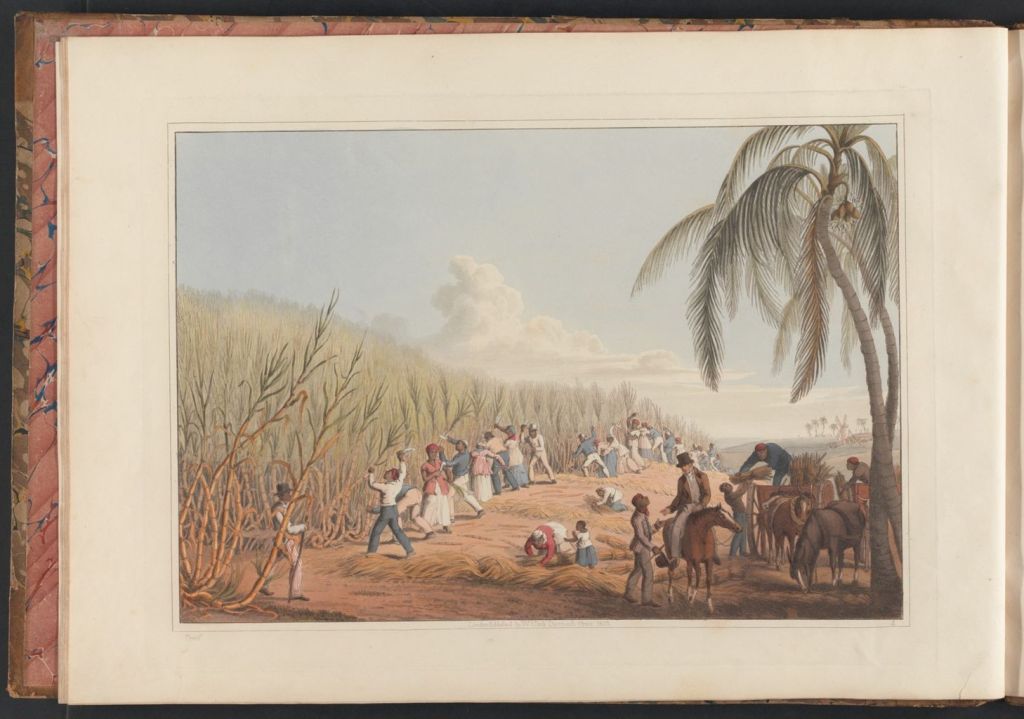
Having (unhappily) received their new name, le Régiment Gatinois were to be sent to reinforce the garrison in the most profitable of the French slave colonies in the Caribbean: Saint-Domingue, now called Haiti. The island’s main products, sugar and coffee, made it the pride of the French colonial trade network, although it is important to remember that this came at the expense of over half a million African people, who had been forcibly enslaved and transported across the Atlantic.
“Ten Views in the Island of Antigua”, [London], Thomas Clay, 1823, hand-colored aquatint, Yale Center for British Art, Paul Mellon Collection
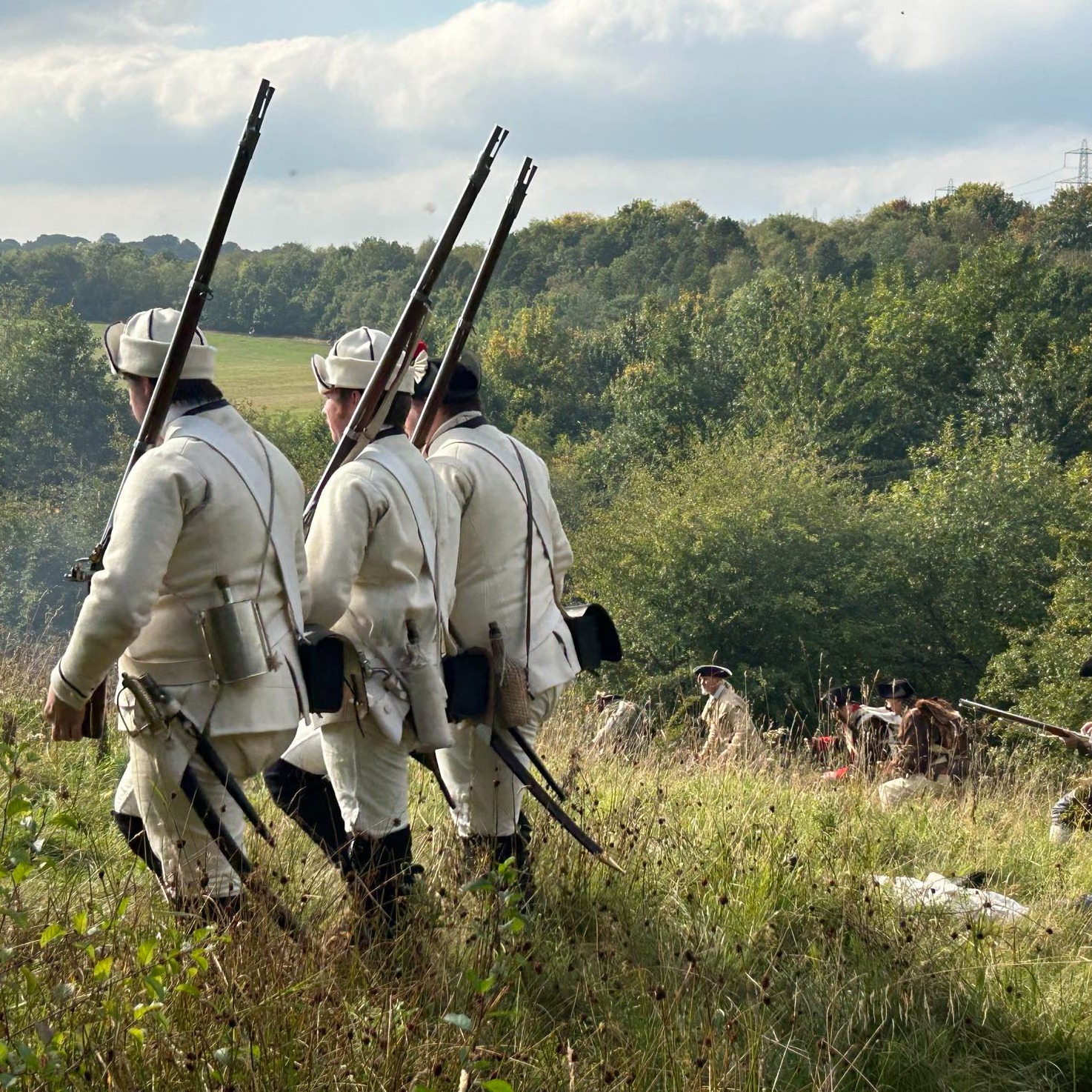
The several regular regiments responsible for its policing and/or protection were augmented by the raising of 12 “colonial regiments” of 12,000 men from across the rest of the Lesser Antilles. Le Gatinois arrived in 1777: one battalion was already in Martinique, but one had to be sent from France. Whilst they were there, they were issued lighter linen vestes and culottes to help them cope with the local climate, as they began preparing for potential action in North America.
Siege of Savannah
With the French having entered the war in 1778, their first major action on American soil was the siege of Savannah, in Georgia. The British had captured it in 1778 and, with no American troops available, the only hope for reconquest was with French or Spanish aid. Charles Henri Hector, Comte d’Estaing, arrived with his force of 4,000 troops in early September 1779. His appearance surprised the Americans, who scrambled to send what soldiers they had, and British negotiations bought time for nearby reinforcements to arrive.
D’Estaing was wary of poor weather and British naval interception, and the siege works were largely ineffective. For the small number of soldats from le Gatinois, the mud and cold of the Georgian winter (not to mention their inadequate “hot weather” issue clothes) caused much complaining. The Franco-American assault on October 9th had little effect, and the besiegers withdrew shortly after. Le Gatinois returned back in Saint-Domingue.
Siege of Yorktown
With the main French force now arriving under Rochambeau into Rhode Island alongside Washington’s Continental Army, and the war turning in the Americans’ favour, the decision was made to break the back of the British Army in the south.
The main Franco-American force marched south in July 1781, and met in Virginia with a force led by Claude-Anne de Rouvroy, Marquis de Saint-Simon-Montbléru, which included both battalions of le Régiment Gatinois. They had landed near Jamestown at the end of August, and spent a short time in Williamsburg, before pressing on to the British fort of Yorktown in late September.
There, le Gatinois formed part of the left wing of the Allied besiegers. Their entrenching duties (digging and constructing trenches) meant that, like at Savannah, the soldats found their linen clothes ill-suited to the winter weather.
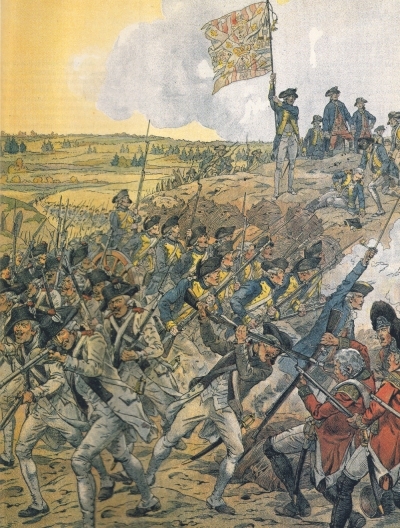
Eventually, on October 14th the Chasseur and Grenadier companies of le Gatinois were sent forward to take Redoubt 9, alongside their comrades in le Regiment de Royal-Deux-Ponts.
Image left: French soldiers storm Redoubt No. 9 on 14 October 1781 during the Siege of Yorktown. By Onfroy de Breville, c. 1900.
It was as bright as daylight, but we ignored the firing and kept on marching. Once we got closer to the redoubt and they could reach us with their muskets, they fired so heavily at us from out of the redoubt that we fell just like snowflakes. One could think that it rained bullets.
Soldat Georges Daniel Flohr, Regiment de Royal-Deux-Ponts
Finally, on October 19th, British General Charles Cornwallis signed the articles of capitulation, and the siege was over. This would be the last major engagement of the war. In March 1782, the British Parliament agreed to cease hostilities, and on September 3rd 1783 the Treaty of Paris officially ended the American Revolutionary War.
Future of the Regiment
Boys, show that Gatinois and Auvergne are one!
Rochambeau to le Gatinois at Yorktown, 14th October 1781
As much as the regiment had covered itself in glory during the American Revolutionary War, the men were not overly fond of their new identity.
Whether it is true that the grenadiers swore to be killed to the last man to earn back their own name, on the 11th July 1782 the regiment was renamed to “Royal-Auvergne”. Le Régiment Gatinois was no more.
Le Régiment de Royal-Auvergne would continue to serve in various guises, including le 18e demi-brigade, le 18e régiment de ligne, le 1er bataillon du 18e régiment d’infanterie parachutiste de choc, and various reserve regiments, before being dissolved in 1988.
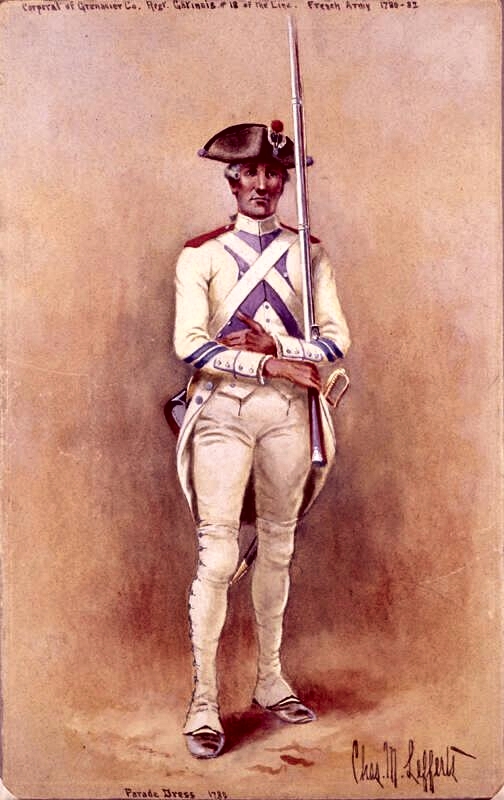
Image left: “Corporal of the Gâtinais Regiment, Grenadier Company”, by Charles M. Lefferts, ca 1910
Research
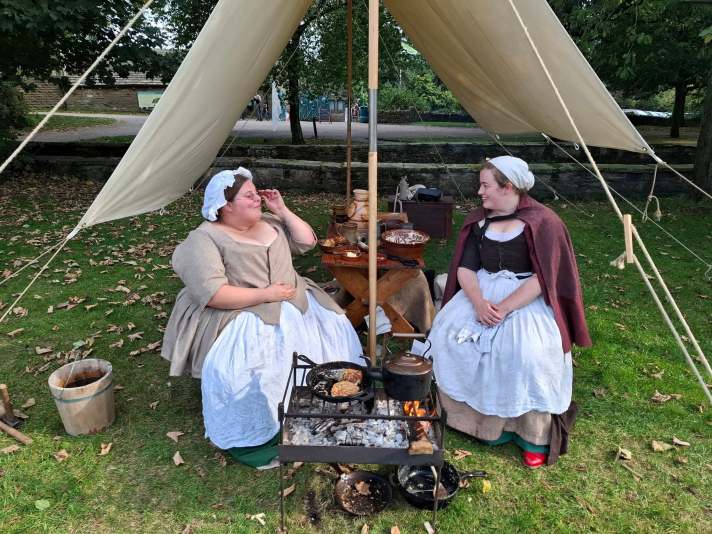
Our members work with a great number of primary sources and experts to ensure their impressions are as accurate as possible – you can take a look at their work below.

 Le Régiment Gatinois